

How Retail Void Analysis Held Identify Market gaps
Every successful retail expansion begins with one important question: where should a brand grow next?
While expanding their businesses, many retail brands often focus on selecting locations with high footfall or growing populations. However, this is not how the smartest brands think and operate. Instead, they go deeper to study the gaps present in different markets, understand the needs, preferences, expectations, and purchasing habits of the consumers, and identify areas with high potential and untapped opportunities (areas where there is a lot of demand but the right solutions are missing). Well, this is exactly the point where retail void analysis becomes an essential part of a brand’s overall growth strategy.
The term retail void analysis can be explained as a research methods that help commercial organizations identify the gaps between what customers need and what the current market is offering. In simple words, it helps brands in identifying areas with opportunity where they can enter, serve customers in a better manner, and dominate the market by establishing a strong presence along with a loyal customer base.
For retail brands planning a store expansion, void analysis helps in reducing uncertainty. Instead of just selecting a new location based on some assumptions or predictions, organizations can actually make informed decisions based on various factors, including real data, customer behavior, competition, purchasing patterns, and local demand. This further allows them to choose the best markets where they can create genuine demand and value for their products and services.
Understanding the Different Types of Retail Gaps
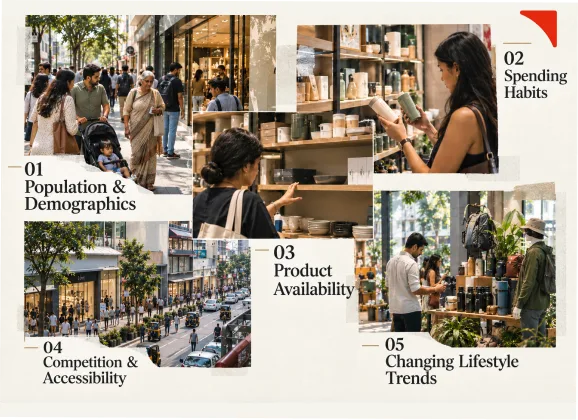
We all know that no two markets are the same. There can be a few similarities, though. Hence, they do not even possess the same issues and gaps. Some markets have a huge customer base, but the availability of some particular products might be limited, further generating a supply shortage. In other markets, existing customers might not be able to deliver a satisfying shopping experience. This automatically creates opportunities for new brands.
When organizations opt for retail void analysis, they can seamlessly examine various crucial factors, including population demographics, spending habits, competitors' presence, accessibility, and other constantly changing lifestyle trends. These useful insights don’t just help organizations understand places where they can enter but also how they position their brand in an effective and efficient manner.
However, just finding the right market is not the only factor that ensures a successful retail expansion. In fact, in order to achieve the desired goals and objectives, brands do need to translate those insights into a real, complete customer experience. To accomplish this, they further need to focus on creating the right product mix, pricing strategy, and physical environment that completely aligns with the needs, preferences, and expectations of the local and target audience.
The Connection Between Retail Void Analysis and Store Planning
Once you have successfully identified a promising market, the next step is to establish an immersive space that directly appeals to your target audience and connects with them. This is where thoughtful store design comes into the picture. A well planned and strategically executed store does not just display products in an effective manner. Instead, it also creates a very comfortable, memorable, and engaging retail experience.
As already stated, every market is unique in its own way. Clearly, customers from different locations, areas, and markets also have different preferences and expectations. Therefore, it becomes extremely crucial for brands to adapt their layouts, product displays, and overall environment, that too, while maintaining their core brand identity and values.
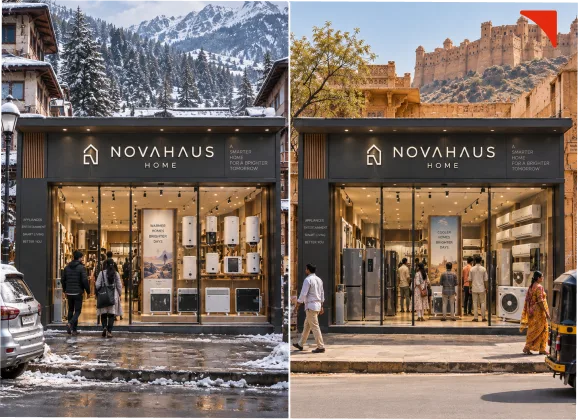
For example, a Hitachi Home outlet located in any area of Himachal Pradesh should consider placing water geysers or air heaters at the front or at high traffic zones within the store. On the other hand, a Hitachi Home outlet located in Rajasthan should consider fridges or air conditioners as its key products.
When brands effectively execute a flexible store design that can easily be adapted based on the requirements of a situation, it helps them maintain a consistent image and identity while adequately responding to local customer preferences.
The journey from identifying the right market, along with the gaps present in it, to opening a successful retail location also demands strong implementation. Because it has always been noticed that even the best retail strategies tend to fail if not executed in an appropriate manner. This makes it clear why effective and efficient store execution should be considered as one of the most important factors during the development process.
Starting right from material selection and manufacturing to installing the materials and conducting quality checks, each and every stage should work together in a smooth and coordinated manner. Because when strategic design is supported with precise execution, the final retail space acts as an immersive destination that aligns with the brand vision and also delivers a consistent experience to the customers.
Building a Smarter Growth Strategy Through Market Insights
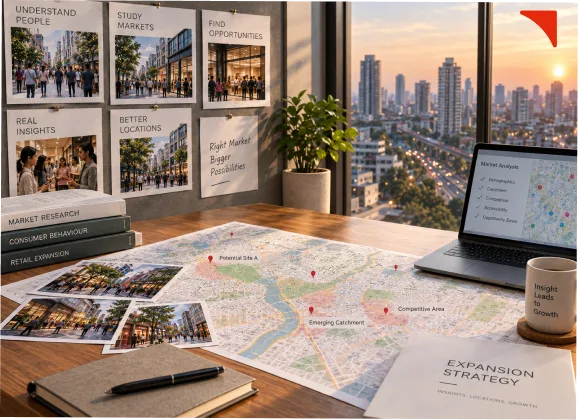
In today’s highly competitive retail environment, it is definitely not enough for brands to rely on intuition, predictions, or assumptions while planning their business growth. In fact, they should necessarily start utilizing market research tools like retail void analysis in order to access valuable data and insights that can further be utilized to make informed decisions, reduce risks, and identify new opportunities.
For retail organizations that are looking forward to expanding their retail network and entering untapped markets, getting an understanding of the gaps present can help them gain a significant competitive advantage. It allows brands to enter the right location, that too, at the right time, with the solutions that are relevant, flexible, and align with customers' demands.
Because after all, successful store expansion is not just about increasing the number of physical outlets or touchpoints. Instead, it is actually about entering meaningful markets, creating immersive and unique experiences that the customers value, and establishing a strong and scalable foundation for sustainable growth.
Retail brands that combine data driven market research with strategic planning, customer focused data and experiences, and operational excellence will be the ones that succeed as they are better prepared to unlock hidden opportunities and grow with confidence in this ever evolving retail era.

Haaris Molvi is a Regional Head - West at D’Art Private Limited, where he spearheads regional expansion, client partnership, and execution strategy in the Western Command.
Known for his structured, yet adaptive leadership style, he specializes in translating complex rollout mandates into streamlines, scalable systems.
and new opportunities in the global retail world.